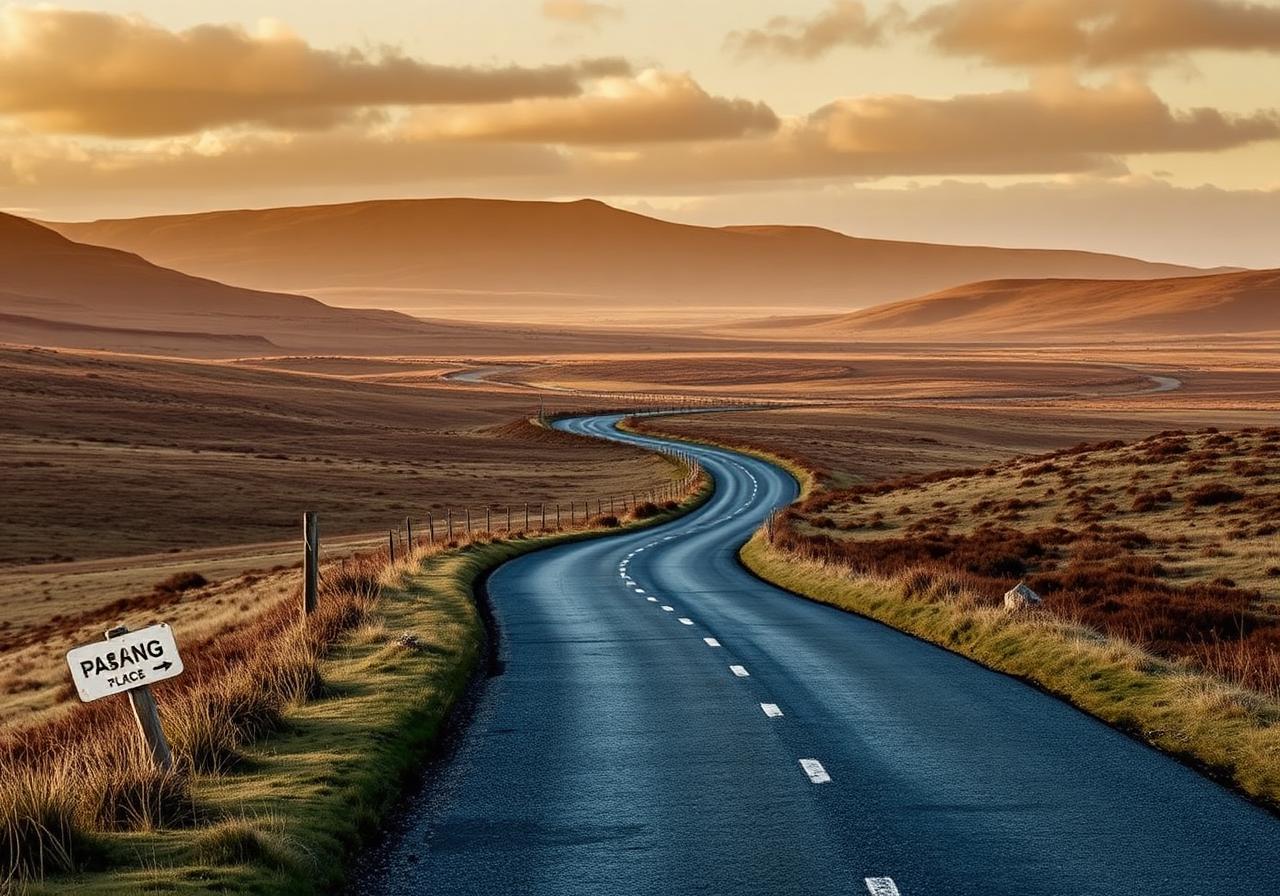
How to drive
Scotland properly.
Ten rules that separate a respectful traveller from a hated one. Read them once before you set off — they make the difference between being waved at and being sworn at.
The passing-place wave
Single-track roads have small lay-bys every couple of hundred metres. If a car approaches, the one closest to a passing-place pulls in (or stops opposite one). The other driver slips past — and you give a little wave. Always. It's the social contract of the Highlands.
Passing places aren't lay-bys
Never park, picnic, or take photos in a passing-place. Locals depend on them. A blocked passing-place backs up an entire glen.
Let people overtake
If three or more cars are stacking up behind you, pull into the next passing-place (on your side) and let them past. Tourists love driving slowly. Locals are going to work.
Sheep have right of way
They will be on the road. They will not move. Slow right down, give them space, never rev or beep. Lambs in spring are unpredictable — assume they'll dart.
Mind the fuel range
In the NW Highlands, petrol stations can be 60+ miles apart and many close on Sundays. Fill up at every chance above ½ tank. Ullapool, Kinlochbervie, Durness, Tongue, Bettyhill — these matter.
Ferries are a timetable, not a queue
CalMac ferries to the islands sell out in summer — book weeks ahead. The check-in deadline is firm. Miss it and you lose the booking.
Wild camping (legally)
Scotland's Outdoor Access Code allows wild camping on most unenclosed land, on foot. Wild camping in vehicles isn't covered — for that, use designated stopovers, registered campsites, or ask a landowner. Leave no trace, ever.
Bridges and roof tents
Some old stone bridges have height limits under 3m. A Defender with a roof tent is around 2.6m. Fine for almost everything, but check signage on minor B-roads.
Stalking season
Sept–Oct is deer-stalking season on private estates. Many hill paths display 'Heading for the Hills' notices — call the number before walking high. It keeps you safe and respects the estate.
Midges (May–September)
Tiny biting flies. Worst at dawn and dusk in still, damp weather. Bring a head-net and Smidge. Wind is your friend — they don't fly above 7mph.