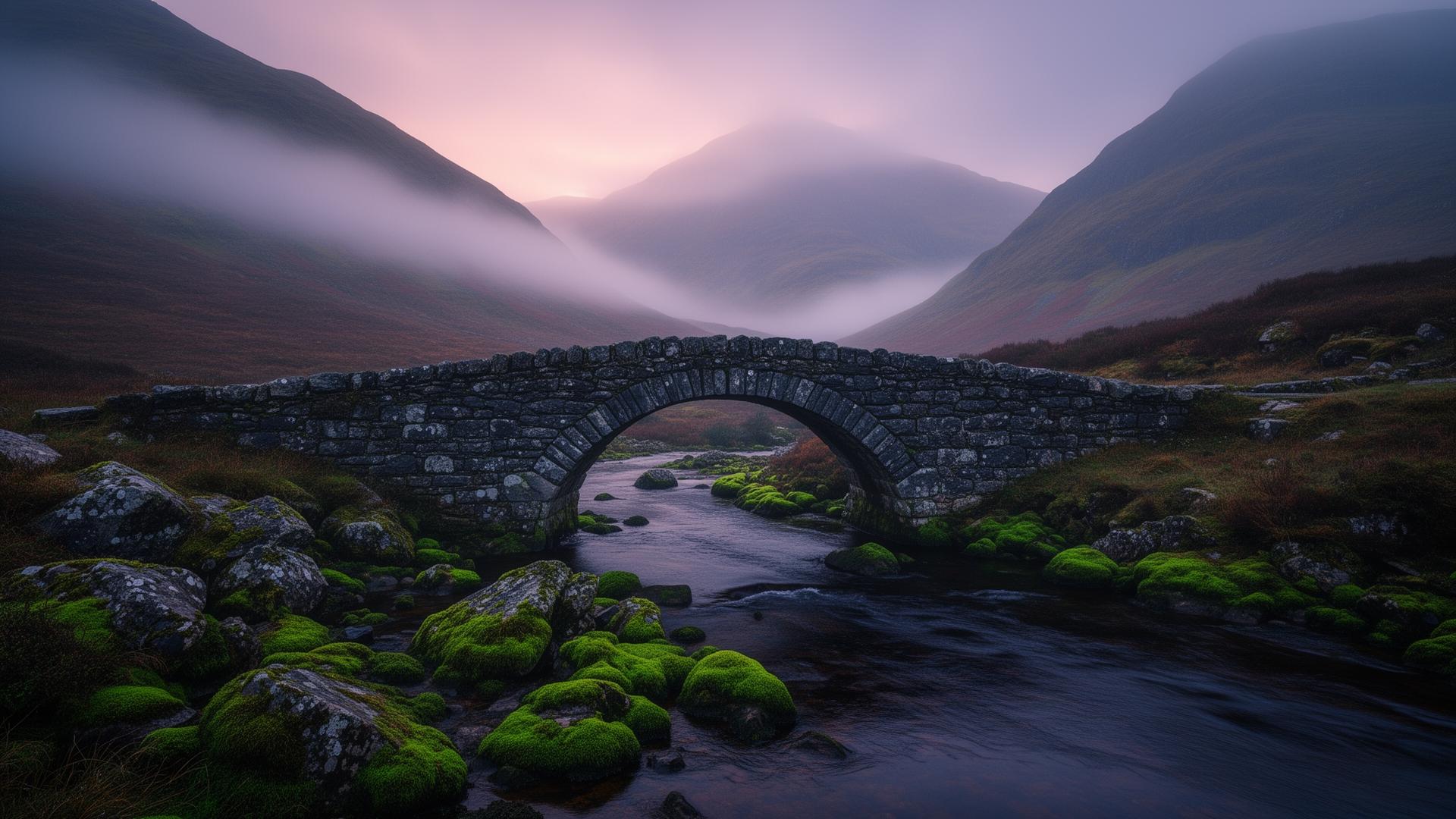
The hours that matter
- First light. Mist still on the lochs. Stags in the open. Almost no one else awake.
- After a squall. Wet rock, broken cloud, sometimes a full rainbow over the glen. Most people are still inside. Don't be.
- The long blue hour. June dusk lasts until eleven. Mountains turn navy and the sky stays gold for an hour. The best landscapes happen here.
- Winter midday. Sun never gets high. Long shadows from twelve till three. Snow on top, copper grass below, and you'll have it to yourself.
Read the cloud
A solid grey lid is hopeless. A grey lid with a horizon gap means the sun will break through low — start driving towards a west-facing view now. A textured sky, broken cumulus, scudding shadows: that's the postcard. Get to high ground.
Where to point
- Assynt. Stac Pollaidh and Suilven from Knockan Crag at sunset. Otherworldly when the light is right.
- Glen Etive. Quieter than Glen Coe, half the people, the same mountains. Side-light at dawn or dusk.
- Loch Maree. Slioch reflected in still water. Be there before the wind picks up — usually nine in the morning at the latest.
- Sanna Bay, Ardnamurchan. White sand, blue water, almost always empty. Late evening light from the west.
- Galloway Forest. Dark Sky Park. Milky Way with the naked eye on a clear winter night. Long exposures, no lights for miles.
Practical
Lens cloth — wet weather. Spare battery — the cold halves them. Tripod — for the blue hour and the night sky. A waterproof bag the camera fits in. And the discipline to keep walking when the light is flat. The next squall is twenty minutes away.
The bluebird days look the same in any country. Scotland is the ten minutes after the rain.
Where next